Read if you like
- Werewolves
- Lonely people finding each other
- The start of an interesting series
Urban fantasy is a great love of mine. The blending of the familiar with the unfamiliar and the mundane with the fantastical is one of my favorite types of worlds, and I’m not alone in that regard if the popularity of the genre is anything to go by. With so many books and not nearly enough time for even the most dedicated reader to enjoy them all, the question becomes what’s worth reading?
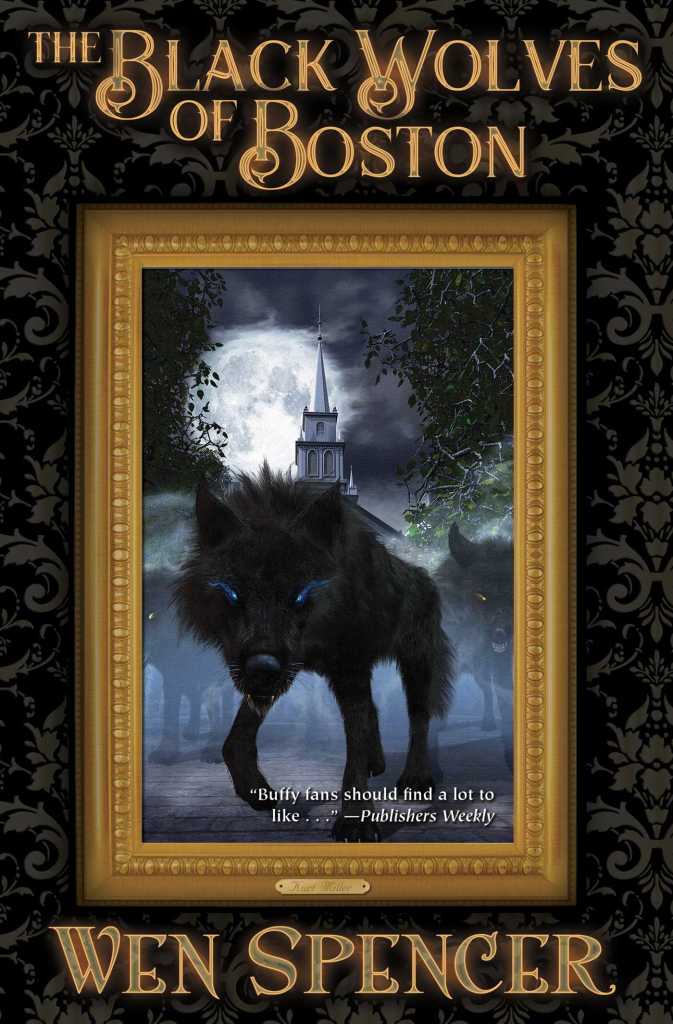
The Black Wolves of Boston, written by Wren Spencer, author of the Elfhome Series, is a good example of a slightly difficult book to judge. Is it good? I’d say so. Is it amazing? Not really. Interesting characters, a decent world, and a good plot combine to produce a fun ride, but while nothing veers off the tracks, it never feels like the book takes the genre to the best it can be.
The Good
The Black Wolves of Boston is at its best when it comes to characters. An interesting cast of individuals tied together by chance, family, and loneliness lie at the heart of the novel. Without getting into too many spoilers, the story follows four main characters as they become drawn into a plot centering around a decades old murder and kidnapping whose motives and consequences slowly become apparent as the tale unfolds. There’s Joshua, a young man nearly out of high school, whose college plans go awry when a violent incident leaves him a werewolf. His unexpected sort-of mentor and friend is Decker, a chronically lonely local Boston vampire. Elise, a temperamental Grigori, is a monster-hunting descendent of angels and the closest thing Decker has to a friend until Joshua falls into his life. And finally, sixteen-year-old Seth is the werewolf Prince of Boston desperately waiting for the day the Wolf King lets him assume his place as the city’s protector.
Other characters also get thrown into the mix, from Seth’s cousin Jack to the somewhat scatterbrained local medium Winnie, but its these four who we follow through the story and from whose perspective we see events unfold. Each of the four main characters is distinct with their own stories, motivations, and flaws. Decker is barely keeping his head above water due to sever loneliness, while Joshua is in panic mode more often then not as he tries to make sense of his new existence. Elise has a decent-sized chip on her shoulder and Seth is eager to throw himself into the thick of things for good or bad. While none of them are unusual as far as main characters go, they’re all written with enough care that they still stand out as excellent protagonists.
It’s these very distinct characters, their relationships with each other, and the way they navigate their world that really make the book a pleasure to read. There is a good mixture of character, comedy, and serious stakes to make the book engaging. Be it Joshua struggling with an unexpected Thanksgiving turkey, Elise being snarky, or Decker trying to decide how many microwaves he needs, the novel never fails to leave you grinning when it decides to be heartwarming. On the other hand, all of the characters have their own personal struggles that feel relatable to one degree or another. The novel is careful never to take itself too seriously, but at the same time never sacrifices the emotional core of its characters for a cheap laugh.
All that said, this is really where the book peaks, leaving the rest of the novel noticeably weaker in comparison.
The Bad
There is nothing intrinsically wrong with the book, but as noted before in most ways it isn’t exceptional. The most obvious area this is apparent is in the world building. The setting of The Black Wolves of Boston feels a bit flat at times. There’s a lot that is interesting (werewolves are the secret protectors of the world and evil witches called Wickers create monstrous constructs with human sacrifice) but the degree to which the story fleshes out this setting feels limited.
Part of this has to do with the perspective of the characters. Joshua is fresh off the boat for all intents and purposes, without a clue as to the world he’s stepped into. Decker is more world weary and knowledgeable, but he’s so disconnected from the modern world that most of his chapters focus more on the mundane than the fantastical. As a Grigori, Elise serves as a well-informed point of view, but her interactions with her own people are so limited that we come out of the book having learned more about werewolves and Wickers from her than about her fellow Virtues.
Seth is the one who provides much of the world-building moments within the story, but even then our glimpses of werewolf culture are often momentary. We are told about what it is like to be a werewolf, we learn about their place in the world, and some things about how their society works, but Seth spends a good chunk of the book as a lone wolf. More than that, he is intrinsically separated from much of his own race by the simple fact that he is a ward of the Wolf King and the Prince of Boston. When in the company of others, he tends to be surrounded by elites of one stripe or another, meaning we only get an idea of day-to-day werewolf life from exposition or his own musings.
For a character-driven novel, this isn’t a deathblow to the story. Most of the time you probably won’t even notice the thinness of the setting, but urban fantasy is at its strongest when it takes place in a well built and interesting world. In the best novels the setting is almost a character unto itself, with its own quirks, flaws, and virtues. “Meh” is that last thing you want to hear about an urban fantasy setting, but that’s kind of what The Black Wolves of Boston provides at times. There’s a lot here that feels like it should be fascinating, but the setting serves more as a backdrop for the characters rather than an intrinsic force acting upon them.
The other main issue is the writing itself. It’s not badly written, but there were moments that pulled me out of the story just a bit. Side characters tend to react conveniently to help drive the plot forward, being far more cooperative or calm then seems plausible at times, and events tended to happen suddenly rather than being built up. In addition there was a real deficiency of villains in the novel. Yes there were antagonists, but it was rare for a serious antagonist to survive a chapter or, sometimes, even a page. The most fleshed out and recurring antagonist wasn’t even a serious threat as much as a loose cannon with an inferiority complex. The real villainous movers and shakers of the story proved to be fairly cookie cutter, with there being plenty of them but none of them standing out as particularly intimidating or special. We know they’re dangerous, we see the horrible things they can and will do, but there’s no real face to these acts that we can love to hate because of how brief their time in the spotlight is.
Individually these two issues could easily be waved away, but together they do detract from the story just a little bit too much to ignore. Is the writing and plot bad? No, I’d say it’s a quite decent vehicle for the character interactions. Is the setting terrible? No, there’s a lot of potential there and what is explored is decently crafted. But at the end of the day, neither of them stand out as exceptional which, in comparison to the character writing, is rather noticeable.
Part of the problem this book has, I suspect, is that it’s a good example of what I call first book syndrome. An author can only throw so much world-building and character development into each novel, meaning that the first book in a series has a lot of ground to cover but only so much room to do so. In a more unique setting, the world can speak for itself, while in a more classic one (werewolves, and vampires, and witches oh my), it takes more effort to stand out which makes finding the right balance to strike more difficult. The Black Wolves of Boston is at its core about characters and its focus is on establishing the main cast, so understandably the setting suffers a bit. A sequel would start out in a much more flexible position with a more established cast and, as a result, more room to fill out the world. So far there isn’t a book two, but I’m keeping my eye out for a sequel to add to my bookshelf for sure.
Conclusion
The book is a solid first entry into what will hopefully be a new series. Is it an exceptional opening novel? No, but it’s a good start all the same. If urban fantasy isn’t your cup of tea, this might be a book to miss, but the strong characters carry the novel in a manner that even non-urban fantasy lovers can enjoy, so it should still be worth a try. I personally enjoyed it a lot and I’m looking to picking up some more books by the author when I get a chance. A solid four stars for a book with a few issues but a solid foundation that makes you grin.
 Buried Under Books and Cats